








































































































































































































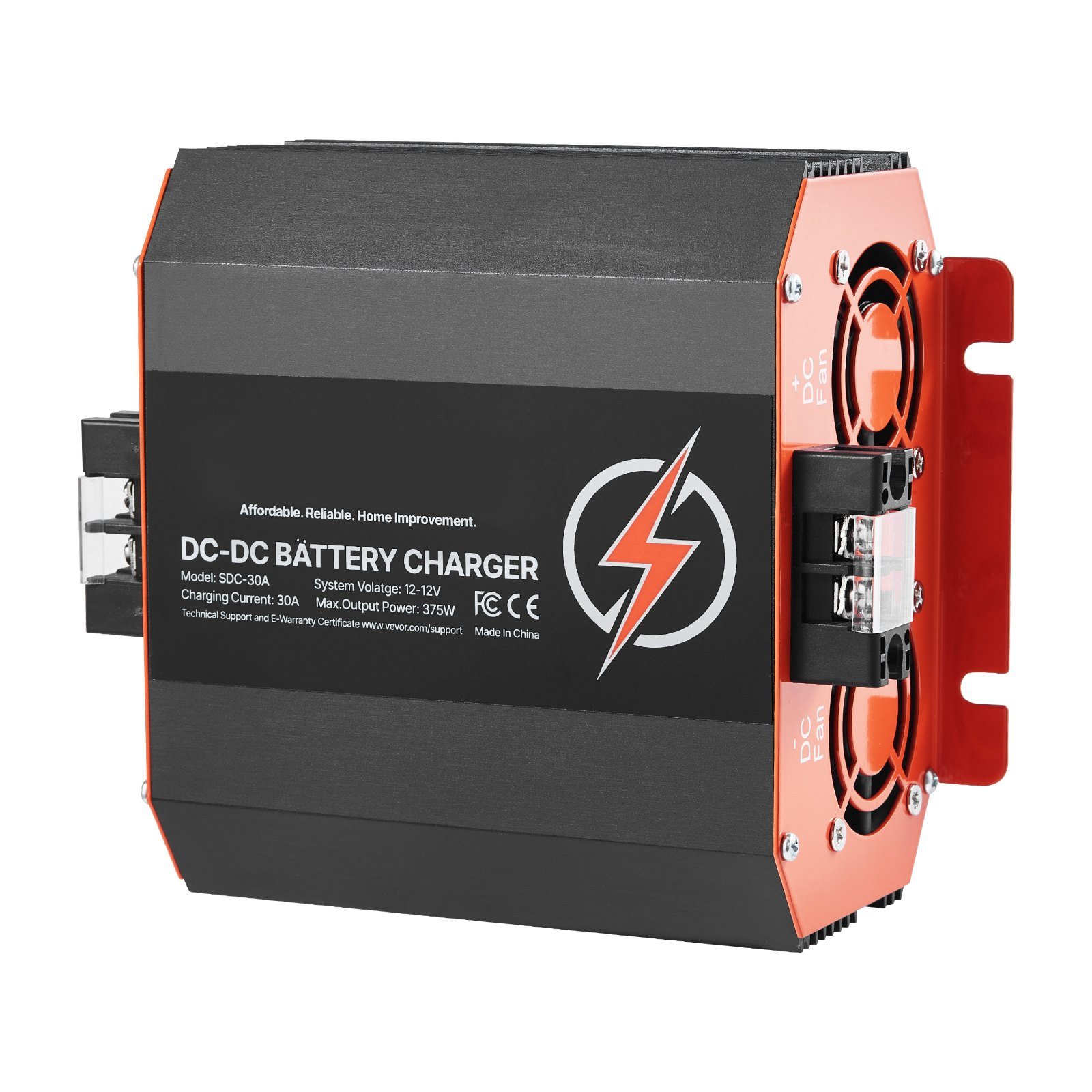
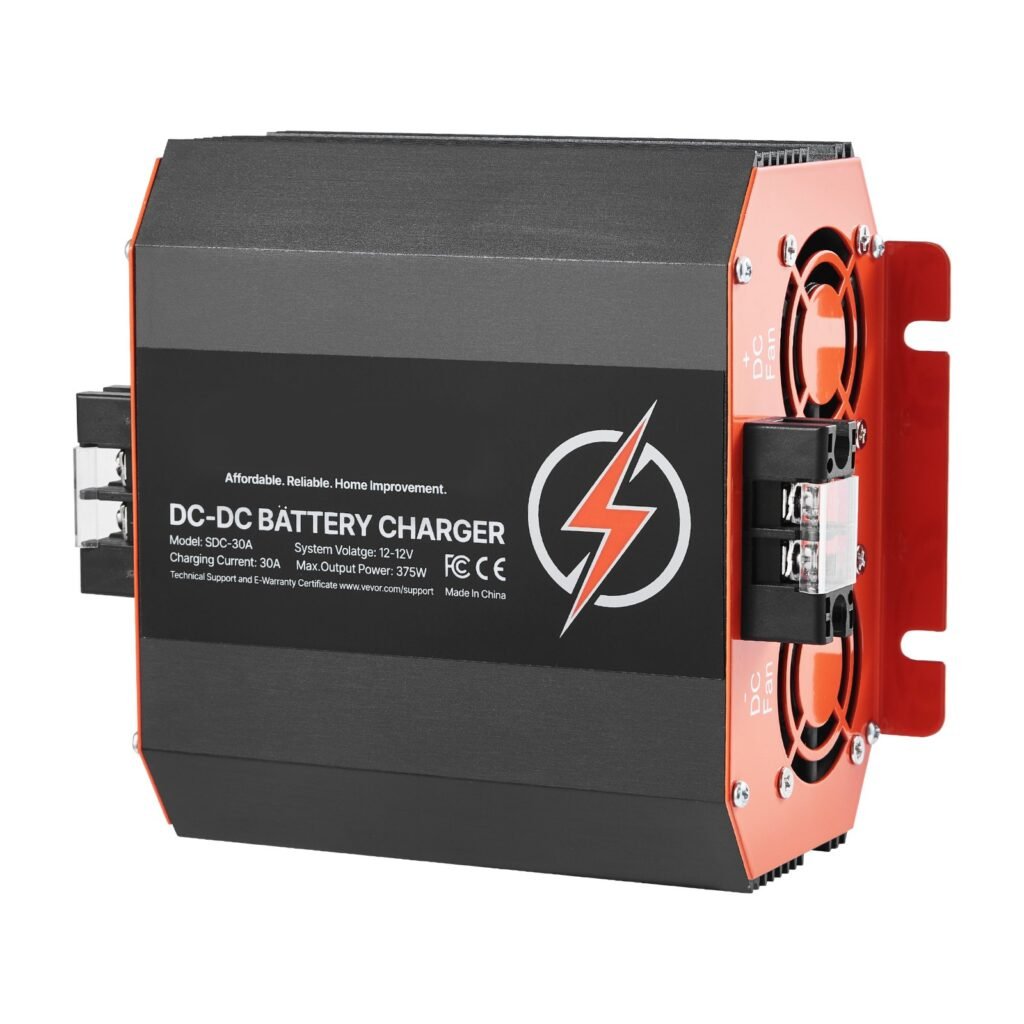
The best 12V 30A DC-to-DC battery charger (375W) is a multi-stage unit capable of seamlessly charging lead-acid, AGM, gel, and lithium batteries. It efficiently regulates current from your alternator to safely and fully charge your auxiliary battery while driving, protecting your vehicle's electrical system with smart temperature and voltage protections.
When you build out an off-grid electrical system for a camper van, utility trailer, or expedition RV, relying solely on solar panels is rarely enough. Shady campsites, overcast days, and heavy nighttime power draws from compressor refrigerators and diesel heaters will quickly drain your house bank. This is where an onboard battery charger becomes the most critical component in your auxiliary charging network. By drawing power directly from your vehicle’s alternator while you drive, you replenish your auxiliary battery bank efficiently during transit.
Finding a reliable unit that handles modern chemistry profiles without damaging your vehicle’s alternator can be challenging. If you want a dependable setup, the best 12v 30a dc to dc charger battery charger 375w for lead-acid and lithium agm gel provides a steady, regulated 375 watts of output to keep your auxiliary setup powered up. Whether you are running a deep-cycle AGM bank or upgrading to a high-capacity LiFePO4 battery, this unit bridges the gap between your starting battery and your house loads.
Priced at $122.74, this hardware offers an accessible entry point for DIY van builders and RV owners who need reliable multi-stage charging without paying commercial-grade prices. In this review, we break down the technical specifications, compatibility, safety protocols, and real-world installation requirements so you can decide if this unit fits your mobile power build.
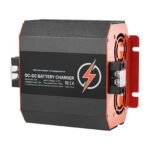
Table of Contents
Why You Need a DC to DC Charger for Your RV
The Limitation of Standard Alternators
Many vehicle owners assume they can simply wire an auxiliary house battery directly to their starter battery using a basic voltage-sensitive relay or isolator. However, modern vehicle alternators—especially those on smart-alternator vehicles built after 2011—regulate output voltage dynamically based on fuel efficiency and starting battery state. A standard isolator will often fail to fully charge a house battery, and high-draw lithium batteries can pull excessive current, overheating and potentially destroying your alternator.
Regulated 375W Power Delivery
A dedicated DC to DC charger solves this problem by acting as an intelligent intermediary. It draws a controlled amount of current from your vehicle’s starter circuit and steps it up or down to match the exact charging profile required by your auxiliary battery. With a 375W output capacity operating at 30 amps, this unit delivers a fast, predictable charge to your battery bank while you drive down the highway, ensuring your house batteries reach 100 percent capacity before you reach your destination.
Key Features and Technical Specifications
Electrical Output and Efficiency
The unit operates on a nominal 12V input system and delivers a steady 30-amp charging current, translating to 375 watts of clean power. This capacity hits a sweet spot for standard camper vans and overland rigs, providing substantial charging speed without requiring massive, expensive heavy-gauge cabling from the engine bay to the rear living space. The conversion efficiency minimizes wasted energy as heat, keeping the internal components running smoothly even during long multi-hour driving sessions.
Isolated Input and Output Design
Electrical interference is a common headache in mobile setups, where sensitive inverters, 12V refrigerators, and communication gear share ground paths. This charger features an isolated input and output architecture. By physically separating the vehicle’s primary chassis electrical system from the auxiliary house system, it prevents voltage spikes, ground loops, and electrical noise from traveling back into your vehicle’s engine control unit (ECU) or audio equipment.
Compatibility With Lithium and Lead-Acid Batteries
Flexibility Across Battery Chemistries
One of the main challenges when upgrading a camper electrical system is choosing charging equipment that can adapt if your battery chemistry changes. If you start with a budget-friendly lead-acid or AGM setup and later upgrade to a lightweight lithium iron phosphate (LiFePO4) bank, you do not want to buy an entirely new charging system. This unit handles both traditional and modern chemistries seamlessly.
Multi-Stage Charging Profiles
Different battery types require specific voltage curves to maximize their lifespan and prevent internal damage. The charger applies a tailored 2-stage charging profile for LiFePO4 batteries, delivering constant current followed by constant voltage before cutting off once full. For traditional flooded, gel, and AGM lead-acid batteries, it switches to a robust 3-stage profile featuring bulk, absorption, and float phases. This float stage ensures your lead-acid batteries remain topped off without boiling off electrolyte fluid during extended storage or driving.
Installation and Safety Protections Explained
Comprehensive Electronic Safeguards
Working with high-amperage 12-volt systems carries inherent risks, but built-in hardware safeguards help protect both your vehicle and your investment. The unit includes over-voltage and under-voltage protection, automatically shutting down if input levels fluctuate outside safe parameters. Additionally, high-temperature thermal protection throttles output or halts operation if the ambient environment in your mounting location gets too hot.
Reverse Polarity and Short Circuit Defense
Mistakes happen during custom wiring projects. To guard against installation errors, the charger features reverse polarity protection, preventing catastrophic circuit failure if positive and negative leads are accidentally swapped. Combined with robust short-circuit safeguards, these features make the best 12v 30a dc to dc charger battery charger 375w for lead-acid and lithium agm gel a forgiving and secure unit for DIY installers who want professional-grade circuit safety.
Pros and Cons
Pros
- Compatible with both traditional lead-acid, AGM, gel, and modern lithium (LiFePO4) battery chemistries.
- Provides a stable 30A charging output (375W) to replenish auxiliary house banks efficiently while driving.
- Isolated input and output design protects the vehicle’s primary electrical system from interference and ground loops.
- Built-in safety protections include over-voltage, under-voltage, high temperature, and reverse polarity defense.
- Affordable price point of $122.74 makes it accessible for budget-conscious DIY van builds and RV upgrades.
Cons
- 30-amp output may be undersized for massive 400Ah+ lithium battery banks that can accept much higher charging currents.
- Requires running dedicated thick-gauge copper wire from the engine bay to the rear house battery for optimal performance.
- Unit lacks integrated Bluetooth monitoring for viewing real-time charging metrics via a smartphone app.
- Fixed output rating cannot be easily scaled up if you decide to expand your battery bank capacity later.
Frequently Asked Questions
Can I use this charger with a smart alternator?
Yes, this charger is compatible with various alternator types, including modern smart alternators found on newer vehicles. Its voltage-sensing capabilities ensure it draws power safely without draining your starting battery below safe operating thresholds.
What wire gauge should I use for installation?
Because this unit draws up to 30 amps over a distance between your vehicle engine bay and your house battery, you should typically use 8 AWG or 6 AWG copper wire depending on the total cable run length to minimize voltage drop.
Does this charger require an ignition wire hookup?
Many DC-to-DC chargers require an ignition signal wire to determine when the engine is running. Refer to the included user manual for your specific wiring configuration to ensure the unit activates only when your vehicle alternator is actively generating power.
Can I charge two different battery banks at the same time?
No, this charger is designed with a single input channel from your starter battery and a single output channel to your auxiliary house battery bank. Attempting to split the output across multiple independent house banks can disrupt the multi-stage charging algorithms.
How does the unit handle high summer temperatures in an RV?
The charger features built-in thermal protection. If the internal components reach high operating thresholds due to poor ventilation or extreme ambient heat, the unit will automatically regulate its output power or pause charging until temperatures drop to a safe level.
If you are tired of arriving at camp with depleted batteries or worrying about whether your DIY electrical setup is straining your vehicle’s alternator, upgrading your system with a dedicated charging unit is essential. At $122.74, the 12V 30A DC to DC Charger Battery Charger 375W delivers the reliable multi-stage power, chemical versatility, and critical safety protections required to keep your off-grid adventures powered indefinitely.

Related Products You May Like